Aerospace / VTOL / Drone Assembly / Flight Systems
VTOL Drone Project
2024 • Club Training Build
This project introduced me to the real build process behind a vertical takeoff and landing drone. As part of a student-led aerospace club, I helped assemble a Sparrow VTOL aircraft from lightweight 3D-printed parts, carbon fiber structure, motors, ESCs, wiring, and flight-control hardware. While this was not my own original aircraft design, it became an important entry point into drones, flight hardware, soldering, and the system-level complexity of making an aircraft work.
Status
Training Build
Aircraft
Sparrow VTOL
Role
Assembly + Electronics
Focus
VTOL Systems
Build Media
These photos document the project as a hands-on aerospace build: group work sessions, soldering, airframe assembly, electronics integration, and the final Sparrow VTOL platform coming together.
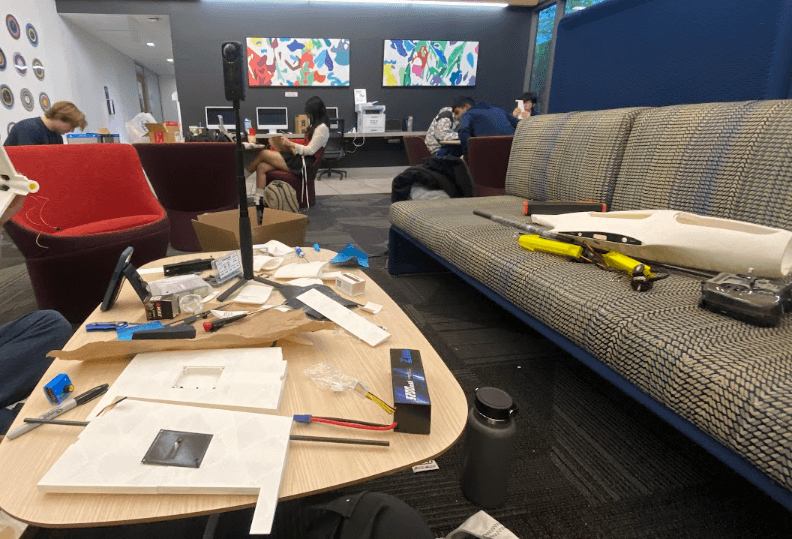
Build Session Setup
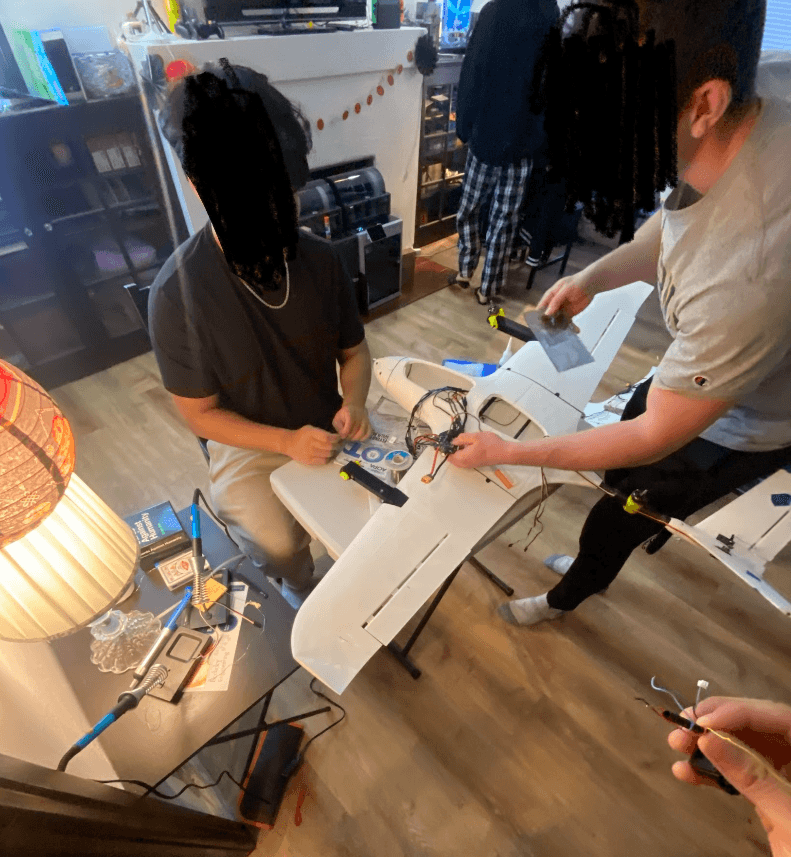
Club build sessions were organized around preparing the airframe, sorting electronics, assembling printed parts, and gradually turning the Sparrow kit into a functional VTOL platform.
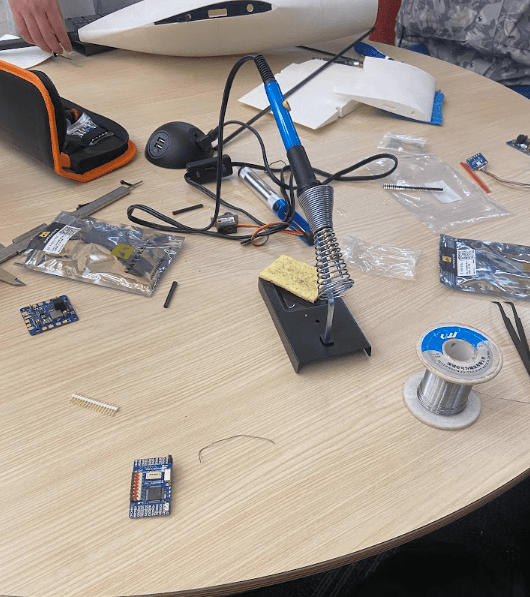
Soldering + Electronics Prep
This project was my first real exposure to soldering drone electronics, including motor, ESC, and flight-controller wiring.
Assembled Sparrow Airframe
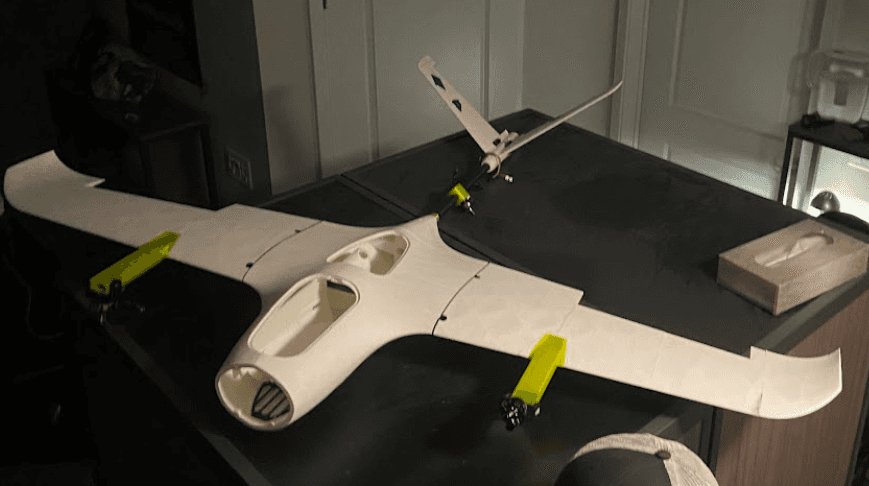
The final assembled platform combined a fixed-wing body with vertical-lift motors, forward-flight surfaces, lightweight printed parts, and internal electronics.
Airframe Assembly
The Sparrow build used lightweight AeroPLA 3D-printed parts and carbon fiber rods to form the airframe structure. My work included preparing printed components, sanding parts, installing inserts, helping assemble the body, and learning how the fixed wing, vertical-lift motors, control surfaces, and internal electronics all had to fit together inside one aircraft.
This was different from a normal quadcopter because the aircraft had to support two flight modes: vertical takeoff and landing, then forward flight. Even though I was not responsible for the original design, the build showed me how much packaging, alignment, weight, and structural stiffness matter before a drone ever reaches the air.
Electronics + Flight Setup
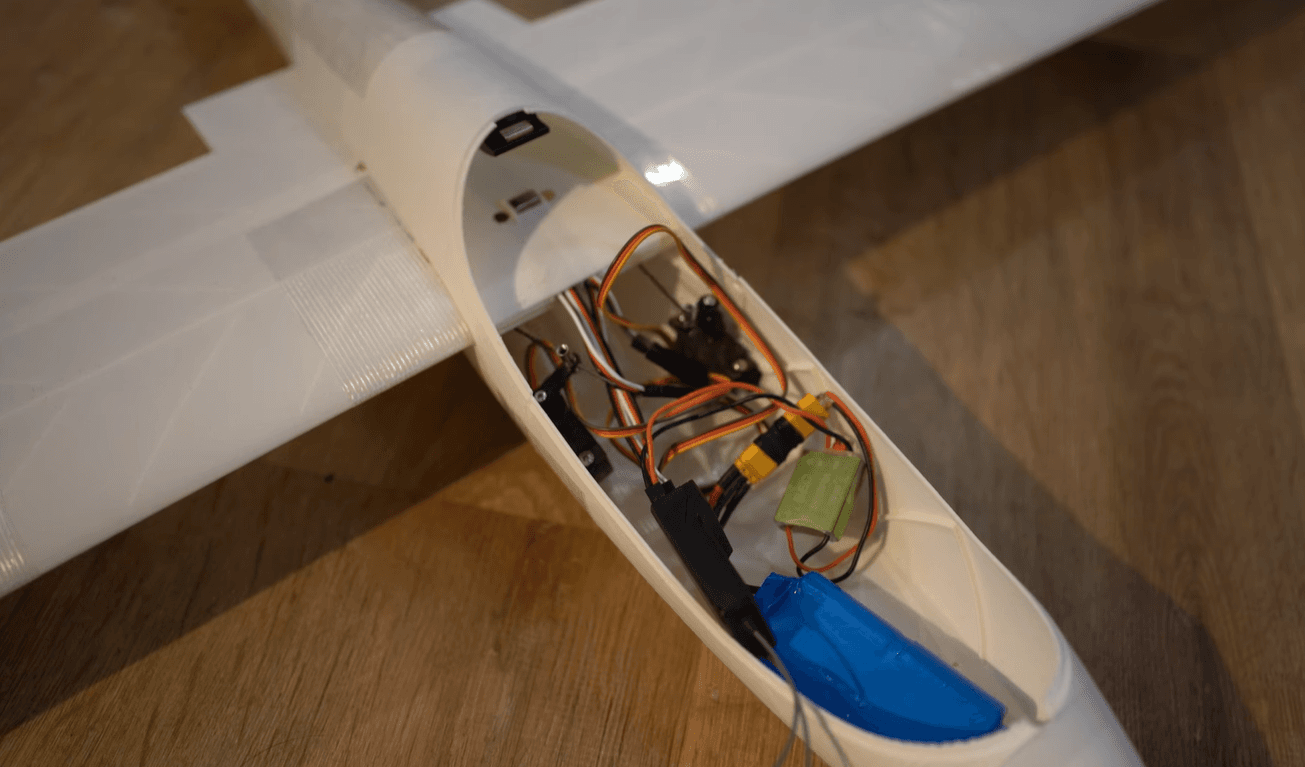
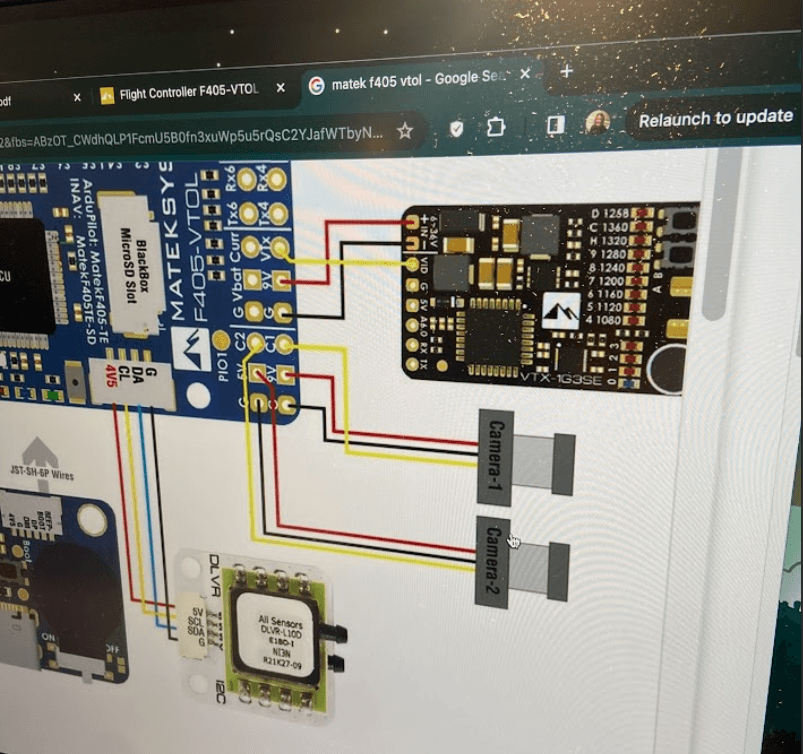
The electronics side exposed me to the real wiring stack of a drone: motors, ESCs, servos, battery power, flight controller connections, and radio communication. I learned soldering during this project and started to understand why motor polarity, connector quality, wire routing, and clean integration matter so much in flight hardware.
After hardware assembly, I also began setting up the software side through ArduPilot and ground-control tools. I did not get full ownership of the flight-tuning process, but the setup gave me my first look into how aircraft configuration, controller communication, and onboard flight electronics come together.
Technical Highlights
Participated in a student-led VTOL drone build project focused on learning the assembly process behind a fixed-wing aircraft capable of vertical takeoff and landing.
Helped prepare and assemble 3D-printed AeroPLA components, including sanding parts, fitting printed structures, and installing threaded inserts.
Worked with lightweight airframe materials, carbon fiber support rods, printed wing structures, motor mounts, and internal electronics packaging.
Gained first-hand experience soldering drone electronics, including motor and ESC connections, while learning how polarity and motor direction affect system behavior.
Set up flight-control software and communication tools to begin connecting the drone, controller, and computer for configuration and testing.
Tools / Hardware / Software
This project emphasized assembly, integration, and exposure to drone systems rather than original aircraft design or simulation.
Engineering Challenges
VTOL Complexity
A VTOL drone is harder than a standard fixed-wing aircraft or quadcopter because it has to manage hover, transition, forward flight, and vertical landing as one connected system.
Electronics Integration
Motors, ESCs, servos, battery power, and the flight controller all had to be packaged inside the airframe without creating wiring confusion or unreliable connections.
Lightweight Structure
The airframe needed to stay light while still being stiff enough to survive handling, motor loads, and assembly tolerances.
Early-Stage Team Constraints
The club had a startup-like environment with limited time, limited testing access, and build sessions organized around student availability.
Mission Log
This project came from a student-led VTOL club at Berkeley whose long-term goal was extremely ambitious: to work toward an undergraduate-built personal VTOL aircraft. The larger vision was difficult and eventually became bigger than what the club could realistically sustain at the time, but the Sparrow project gave newer members a way to learn the fundamentals of drone assembly, electronics, and flight systems through a real build.
Before joining the main build, I had worked on a small starting task involving landing gear for a helicopter-style project. Even though I did not fully understand the deeper equations or flight mechanics yet, I modeled and 3D printed a part, which helped me get involved with the team. From there, I participated in several Sparrow build sessions where we prepared printed parts, sanded components, installed inserts, assembled the airframe, and worked through the mechanical structure of the aircraft.
The most valuable part for me was seeing the aircraft as a full system. The drone was not just a body with motors attached. It had printed structures, carbon fiber rods, propellers, ESCs, servos, wiring, battery power, a flight controller, and software that all needed to communicate correctly. I learned soldering during this project and started to understand how small wiring decisions could affect motor direction, reliability, and whether the aircraft could be configured properly.
I did not lead the design, simulation, or final flight testing, and I want to represent that honestly. My contribution was mainly in assembly, soldering, electronics preparation, and early software setup. Still, this project mattered because it gave me my first real exposure to aerospace hardware beyond theory. It showed me that flight systems are unforgiving, highly integrated, and much harder to execute than they look from the outside.
Final Result
By the end of my involvement, the Sparrow VTOL platform had progressed through major assembly and electronics integration. I was not present for the final launch attempt, but the project succeeded as a training build by giving members hands-on experience with drone hardware, soldering, flight-controller setup, and the practical challenges of VTOL aircraft.
What I Learned
This project introduced me to drones as complete engineering systems. I learned that aircraft performance depends on much more than just thrust: weight distribution, stiffness, wiring, electronics reliability, flight-control setup, motor direction, and team coordination all matter. It also helped me understand the gap between research, assembly, and real testing.
Looking back, the biggest lesson was that aerospace projects need testing early. Research and planning are important, but flight hardware becomes real through iteration, failure, debugging, and repeated validation.